

The research
The systematic archaeological research at Kymissala
Systematic archaeological research in the Kymissala area began in 2006, conducted by the Department of Mediterranean Studies: Archaeology, Linguistics, and International Relations of the University of the Aegean, in collaboration with the Ephorate of Antiquities of the Dodecanese, and continues to the present day under the direction of Professor Manolis I. Stefanakis and Eleni Farmakidou, Deputy Ephore of the Ephorate of Antiquities of the Dodecanese and the participation of Evangelia Dema, archaeologist of the Ephorate of Antiquities of the Dodecanese. A significant contribution has also been made by the School of Rural and Surveying Engineering of the National Technical University of Athens, under the direction of Emeritus Professor of Photogrammetry Andreas Georgopoulos, which has mapped and documented many archaeological sites and monuments in the area.
The archaeological research has two components: a) intensive surface field survey and
b) systematic excavation. Regarding the surface survey, the main objectives are the identification of new archaeological sites, the assessment of their density and spatial distribution, and the determination of their character. The excavation, on the other hand, is currently focused on specifying and clarifying the nature and chronological span of use of the central necropolis at Kymissala and the acropolis temple on the hill of Hagios Fokas. The type of visible archaeological evidence, its size and nature, its spatial distribution and density, make it possible to attempt initial interpretations concerning the archaeological sites and monuments, their distribution within the wider area, and their more precise dating. They also allow their interrelation to be examined, enabling a preliminary assessment of the extent, boundaries, and spatial development of the ancient Deme of Kymissaleis.
Research to date has demonstrated that the ancient Deme of Kymissaleis was extensive: the area covered by the archaeological remains identified so far exceeds 21 km², centred on the strongly fortified acropolis at the summit of the hill of Hagios Fokas. The acropolis, which houses an ancient temple, dominates the surrounding region and controls at least eleven extensive archaeological sites (settlements/installations) that develop around it. Adjacent to the settlements are cemeteries, the most important of which is the central necropolis, occupying the entire valley between the hills of Hagios Fokas and Kymissala.
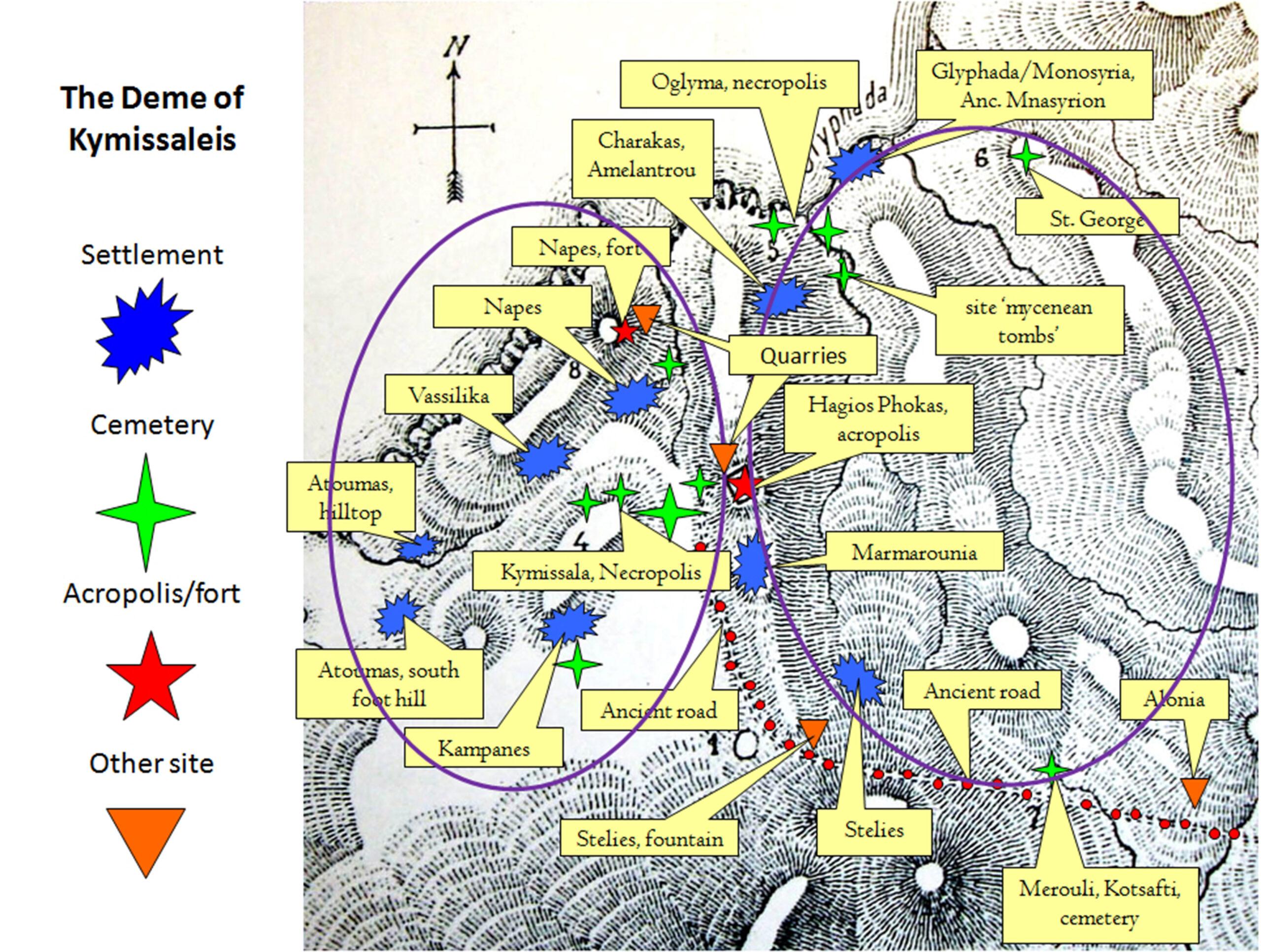
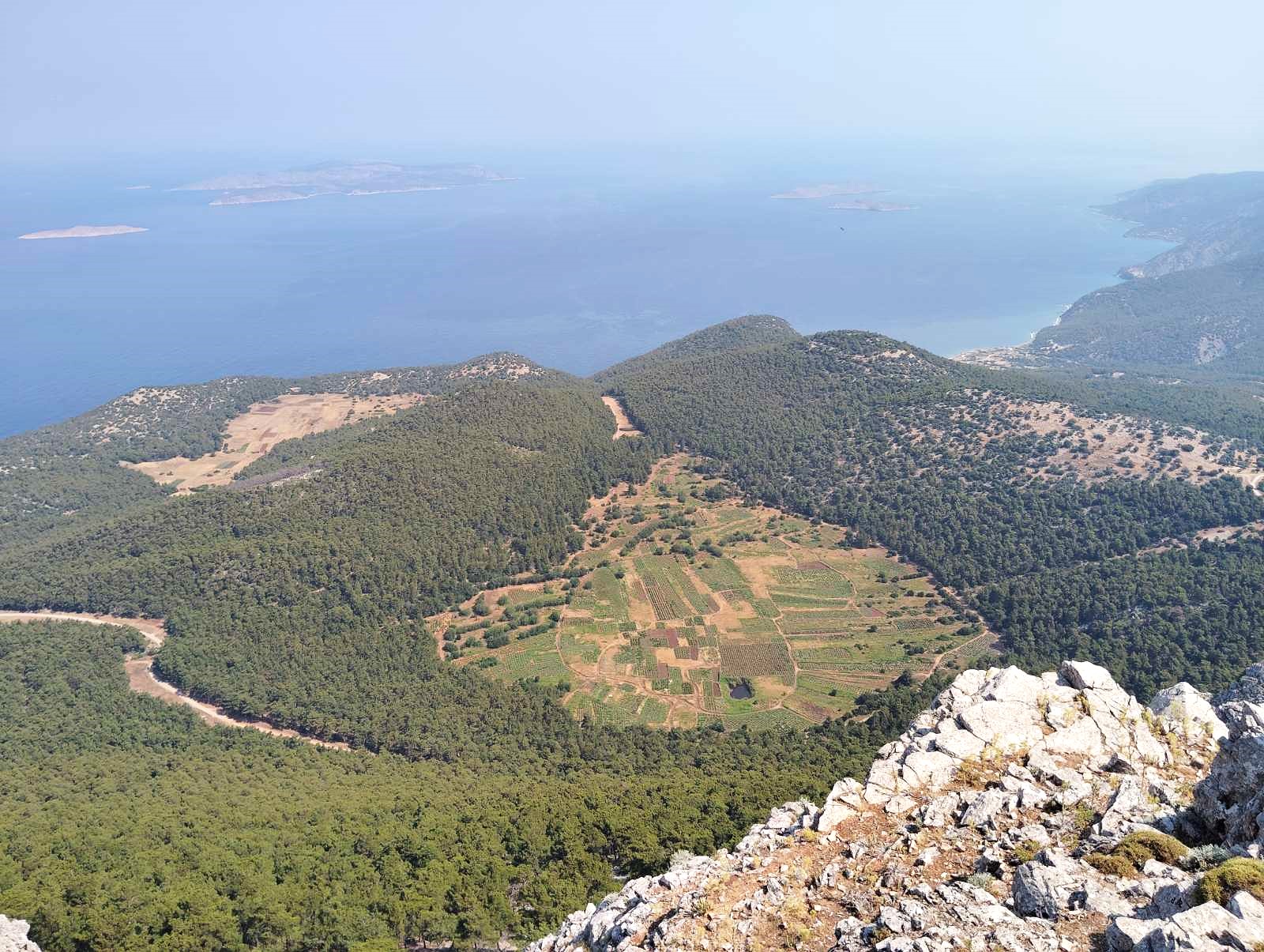
As evidenced both by the excavation of the central necropolis and by sporadic archaeological finds from the wider area over time, the site appears to have been inhabited at least from the Archaic period (7th c. BC) through Late Antiquity (4th-6th c. AD). Even earlier remains have also been recorded, dating to the Neolithic period and the Bronze Age.