

The site
The archaeological site
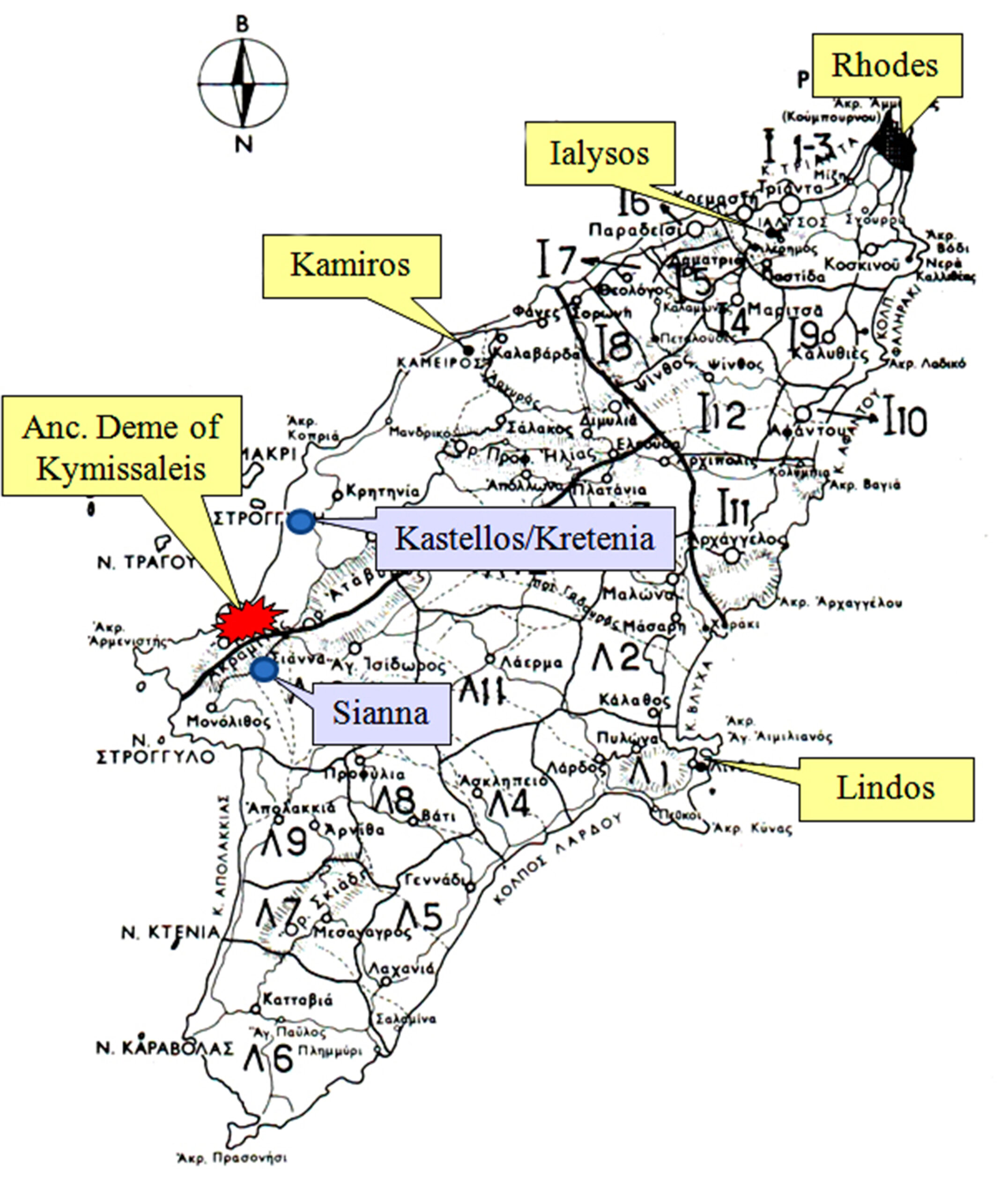
The area of Kymissala lies north of Mount Akramytis, in a rugged, semi-mountainous landscape covered with dense pine forest, approximately 85 kilometres southwest of the city of Rhodes. It extends across the land districts of the villages of Siana and Monolithos. In the area, the remains of the Deme of Kymissaleis are largely preserved and still visible. This was a little-known ancient Deme of Rhodes and the first rural Deme on the island to be studied systematically. The preservation of the toponym “Kymissala” and the municipal designation “Kymissaleus,” which accompanies the names of prominent deceased individuals on funerary stelae found in the area, provides striking evidence of the identification of this region with the ancient Deme of Kymissaleis.
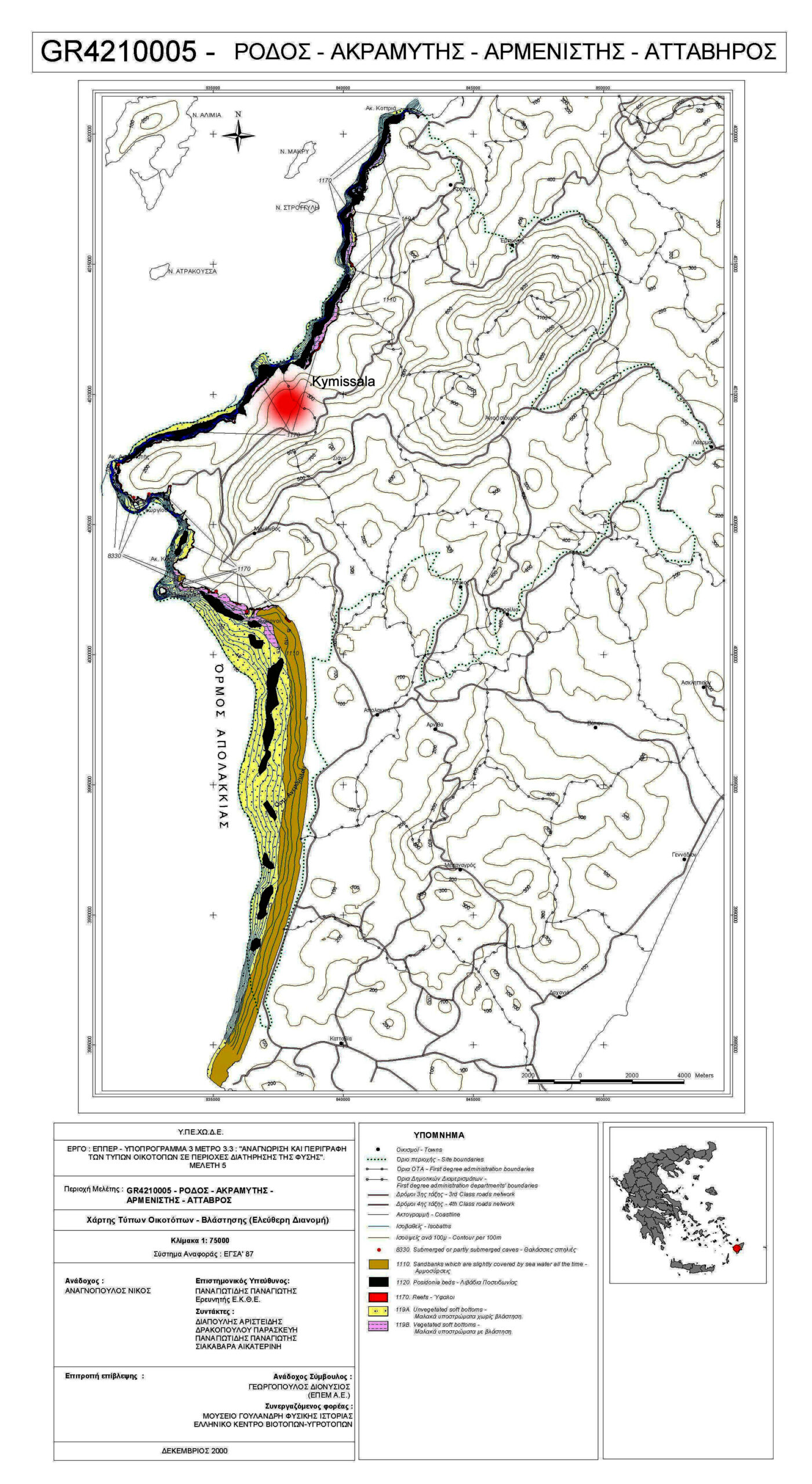
The protected Natura 2000 area “Akramytis – Armenistis – Atavyros”
The Kymissala area is not only of tremendous archaeological interest but also holds significant environmental and ecological value. Much of the landscape remains untouched by modern interventions, is covered by extensive and dense pine forests, and exhibits remarkable biodiversity. For this reason, the “Akramytis – Armenistis – Atavyros” area, where the archaeological remains of the Deme of Kymissaleis are scattered, has been included in the European network of habitats, Natura 2000 (code GR 4210005). The broader area covers over 170,000 acres (approximately 17,000 hectares) and is of both special geomorphological and historical interest. It also contains a wide variety of habitat types of particular importance, including submarine meadows, sandy beaches with dunes and seal caves, pine forests, and native cypress forests.