
The importance of the research
The archaeological research at Kymissala is considered exceptionally important both for the University of the Aegean and for the local community. Beyond the scientific work it produces, it also fulfils two additional significant objectives: a) the training of undergraduate and postgraduate students of the Archaeology Division of the University of the Aegean in field research, and b) the promotion and highlighting of an area of environmental and ecological interest.
The educational dimension of the archaeological research
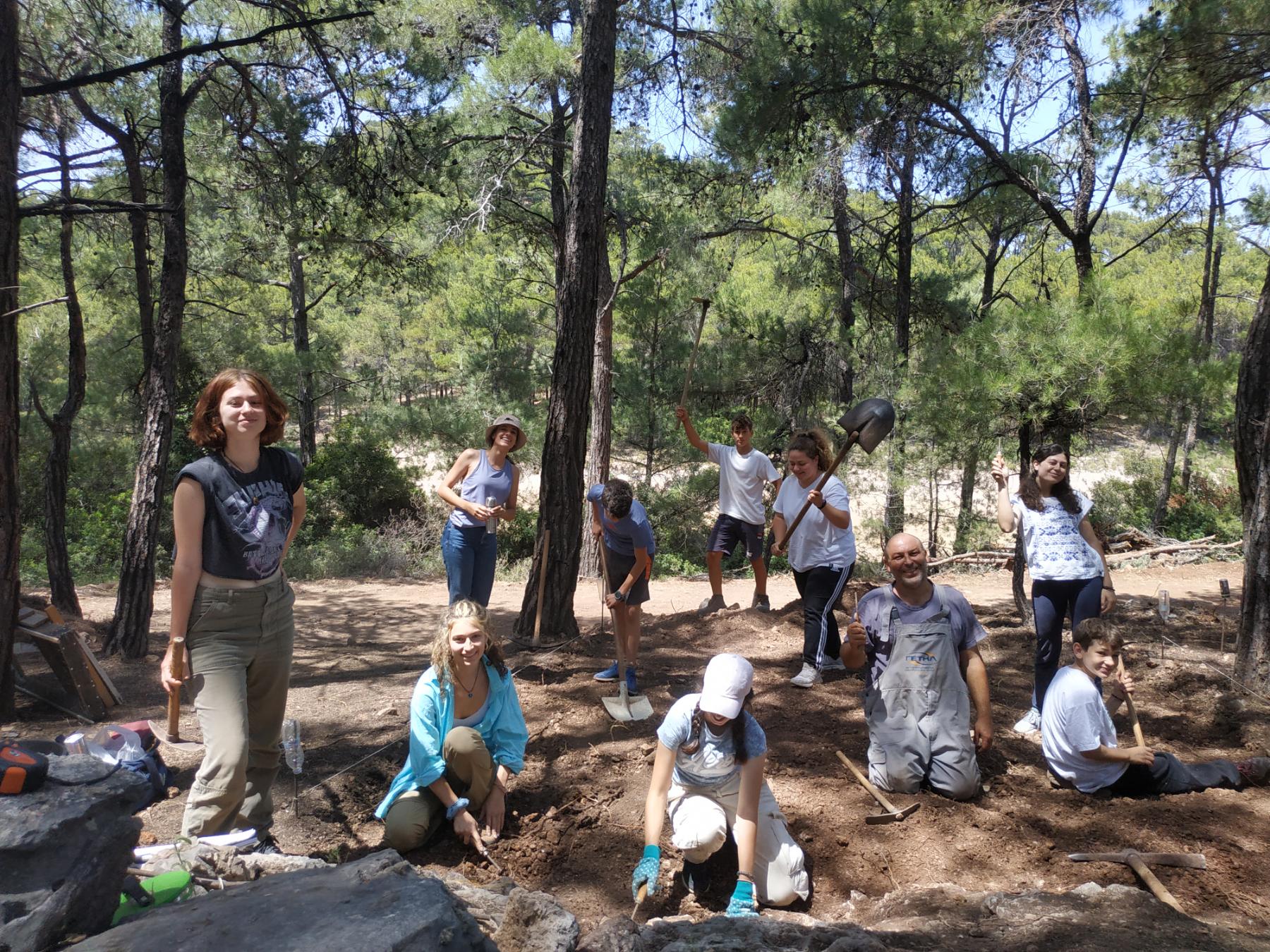
Each year, numerous undergraduate and postgraduate students from the Archaeology Division of the Department of Mediterranean Studies participate in both the intensive surface survey and the systematic excavation. Students from collaborating foreign institutions –such as the Polish Academy of Sciences in Warsaw– as well as students from the School of Rural and Surveying Engineering of the National Technical University of Athens, also take part. The archaeology students who participate assume the roles of field archaeologists, always under the guidance of the excavation directors or experienced scientific associates. By the end of each excavation season, they are expected to have gained the experience necessary to understand the role, significance, and standard procedures of an archaeological excavation –skills essential for any aspiring archaeologist.
In addition, the students of archaeology at the University of the Aegean have the rare opportunity to participate in a research project conducted jointly with the Ephorate of Antiquities of the Dodecanese. This is of particular importance, as it actively involves members of the local Archaeological Service in the educational process. These professionals possess extensive field experience, a deep knowledge of the archaeology of Rhodes, and the ability to address and resolve both practical and scientific issues with considerable flexibility.
The development of the site
The archaeological research represents a prime opportunity to highlight the environmental and ecological wealth of the region, as the visible and readily accessible antiquities of the Deme of Kymissaleis are uniquely situated within the Akramytis–Armenistis–Atavyros area, which has been designated a protected site within the Natura 2000 network.
This comparative advantage of the region, combined with the promotion of its archaeological sites and monuments, could soon lead to the creation of a unique archaeological-ecological park and the development of sustainable initiatives. At its core could be, on the one hand, an extensive open-air archaeological museum –comprising the area’s major archaeological sites and monuments– and, on the other hand, locations of environmental and ecological interest, interconnected by walking trails. The implementation of such an initiative would safeguard the character of the region, preserving both its exceptionally important antiquities and its unique habitats, and would foster sustainable and long-term development in the semi-mountainous area of Akramytis.
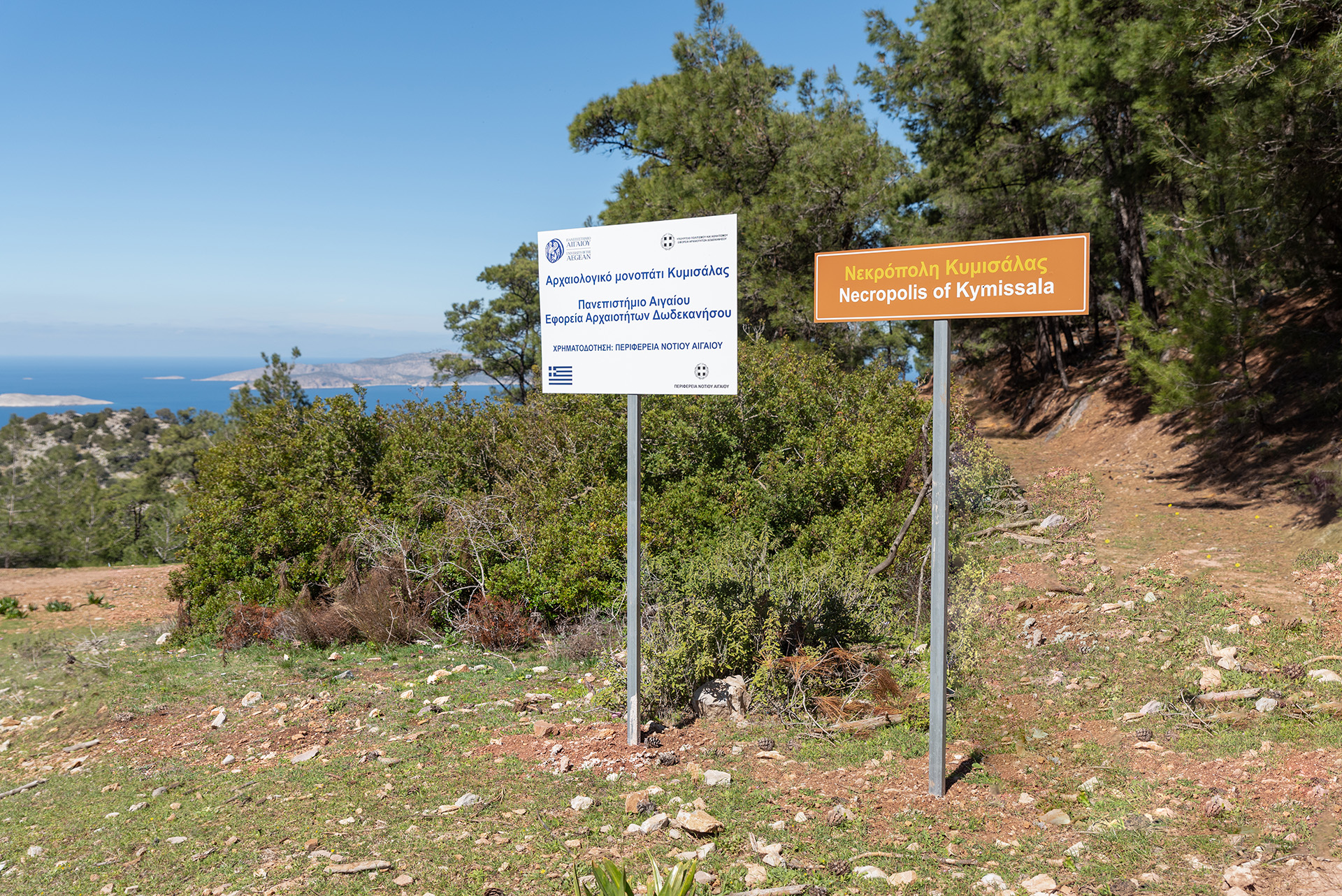
Within this framework, the South Aegean Region funded the project “Promotion of the Acropolis of Hagios Fokas and its interconnection with the Necropolis of Kymissala,” which is being implemented through a Development Agreement between the University of the Aegean, the Ministry of Culture, and the Regional Government of the South Aegean. Beyond its research and academic implications, this project represents, in practice, the first phase in creating infrastructure to promote the archaeological and natural wealth of the area. Its objectives included the clearing of vegetation from the acropolis walls, the excavation of two sacred areas within the acropolis, and the connection of the archaeological site of Marmarounia with the aforementioned sanctuaries, the acropolis of Hagios Fokas, and subsequently the quarries on the western slope of the hill and the necropolis of Kymissala, through a walking trail designed according to specifications approved by the Ministry of Culture. Through this initiative, the Department of Mediterranean Studies provided the local community with the first complete walking routes and the first accessible archaeological cores.