
Research results
Kymissala Development Agreement 2021–2022
Within the framework of the Development Agreement between the University of the Aegean, the Ministry of Culture, and the Regional Government of the South Aegean “Promotion of the Ancient Acropolis of Hagios Fokas and its Interconnection with the Necropolis of Kymissala”, fieldwork and academic research were carried out at the archaeological site of Kymissala, with the main actions including the maintenance and development of a walking trail for touring the archaeological sites of the area, according to specifications approved by the Ministry of Culture, the tidying of the necropolis at the Skali location, the clearing of the acropolis walls and the area of the ancient temple, and the conservation of ceramics from the excavation.
Walking trail
The works for the maintenance and development of the walking trail, under the supervision of archaeologist Dionysia Sourasi, were carried out in three separate phases and were completed in July 2022. The first phase included the maintenance and development of the trail from the Marmarounia site to the Hagios Fokas site, approximately 1,100 m in length; the second phase included the maintenance and development of the trail from the Hagios Fokas site to the Skali site (Kymissala necropolis), approximately 350 m in length; and, finally, the third phase included the maintenance of the archaeological site of the Kymissala necropolis (Skali) and its access points. All works concerning the development and promotion of the trail were carried out manually with restraint and care, so as not to disturb the natural landscape and to avoid any intervention or disturbance to the monuments and the archaeological site. The trail was formed by clearing the path of falling and displaced materials, such as tree trunks and branches, small and large stones, piles of soil, as well as by removing low vegetation, strictly only within the width of the trail and without using machinery for the removal or levelling of the natural rock. Medium-sized loose stones marked the trail width specified in the study, which does not exceed 2 m, and is suitable for the simultaneous passage of two people or for transporting a stretcher with an injured person.
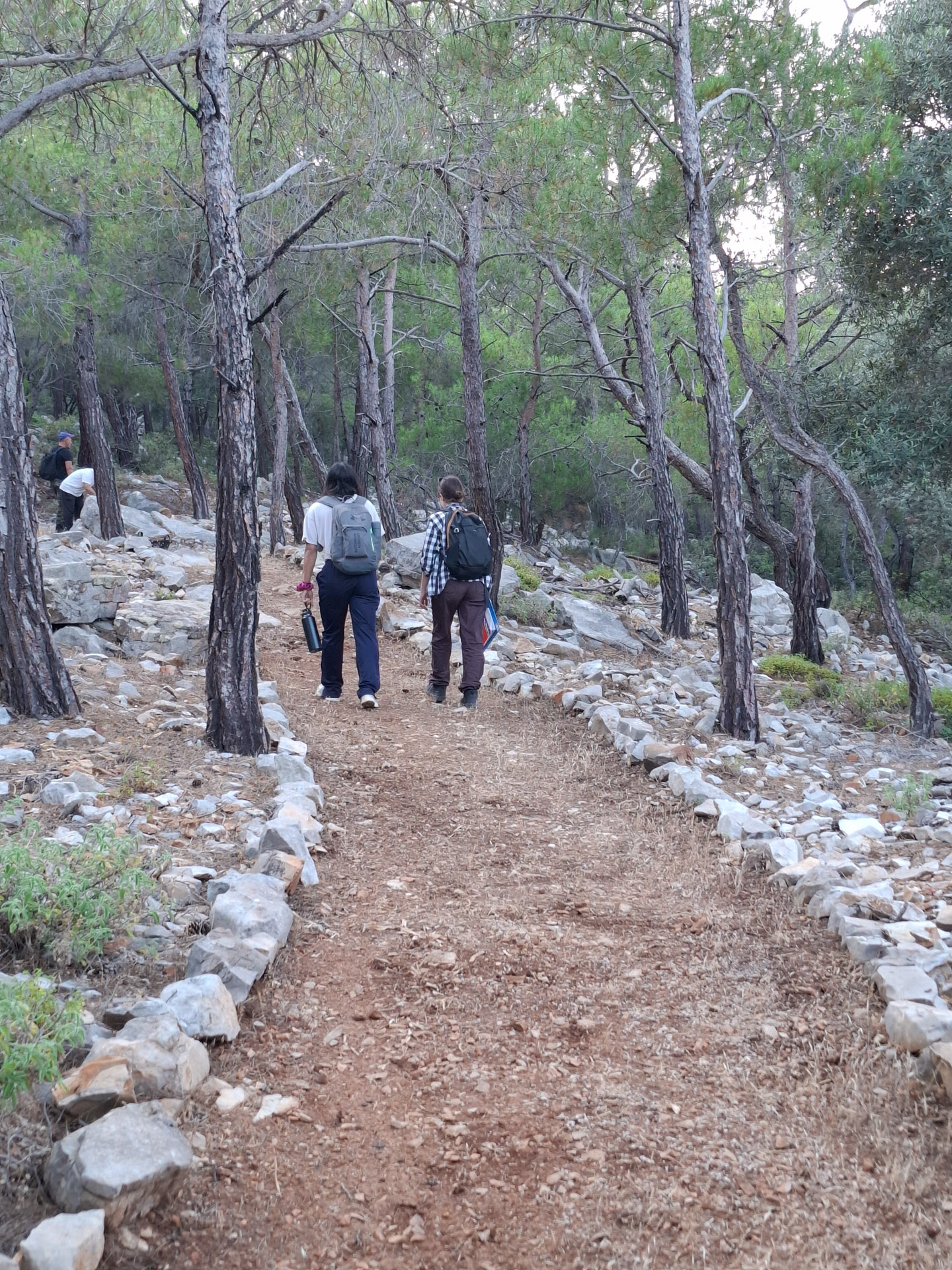
With the completion of the walking trail from Marmarounia to the Kymissala basin, it became possible to connect important archaeological sites of the Deme of Kymissaleis, specifically the sites of “Marmarounia,” “enclosure with altar,” “area with rock-cut altar and bases,” “Acropolis of Hagios Fokas/acropolis walls,” “Hellenistic acropolis temple,” “quarry,” and the “Hellenistic necropolis of Kymissala”. In this way, a low-difficulty route of grade 1-2 was created, making it possible to visit an area that was previously difficult to access. In addition, the area currently functions as an important access route for the Forestry Service, the Fire Service, and volunteer rescue teams operating within this sector of the Kymissala forest. It also serves as a containment zone for creeping or surface fires, which constitute a particularly serious and challenging category of wildfires.
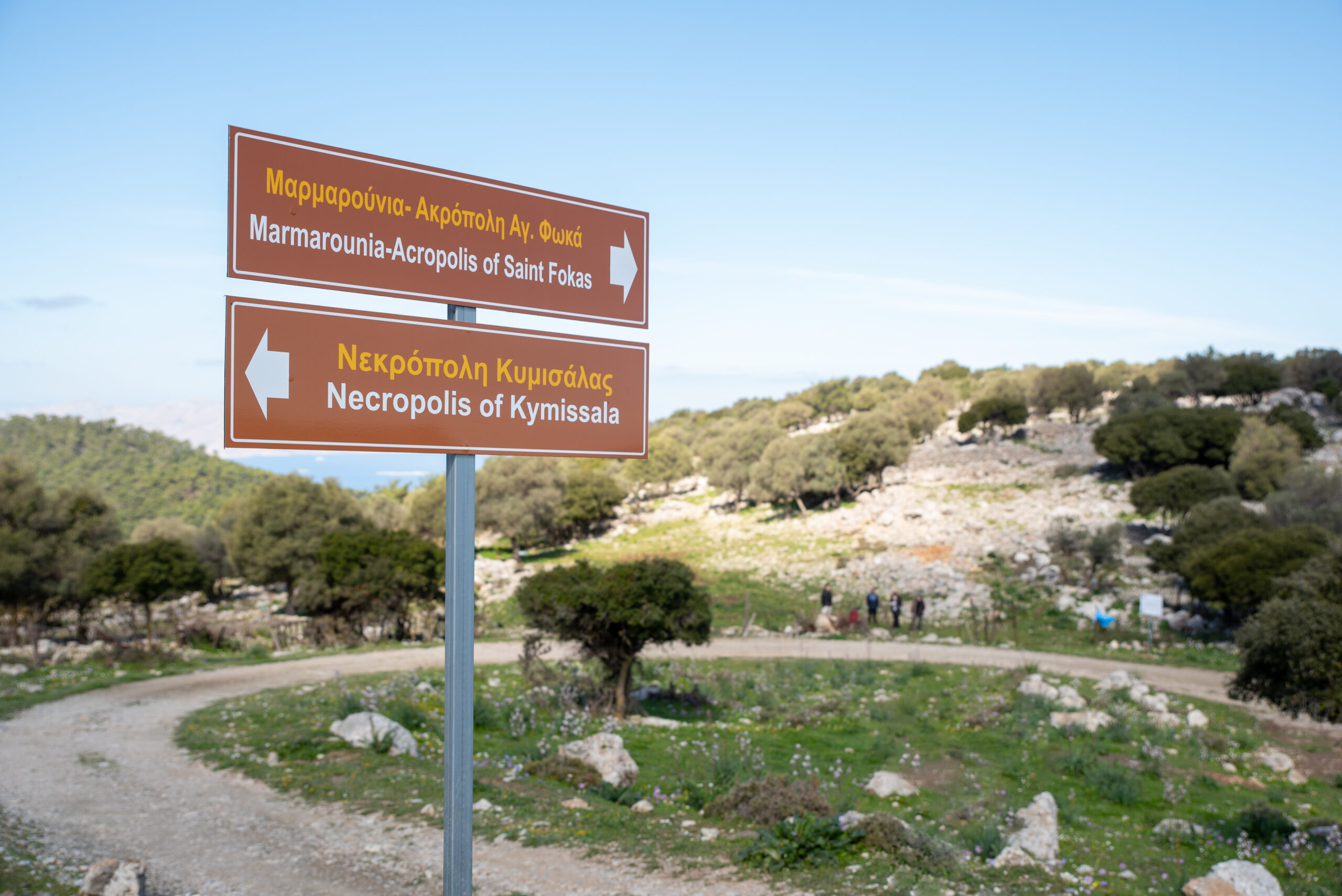
This was followed by the installation of signage, as marking is an essential prerequisite for the proper functioning of trails, providing visitors with basic information about the site and route while giving the area a clear identity.
The fortification wall and the temple area
The project aimed to clear a considerable part of the acropolis fortification wall and the surrounding area of the temple, under the supervision of archaeologist Dionysia Sourasi, were carried out in two separate phases and was completed in November 2022:
The initial phase involved the clearance of low and shrubby vegetation over an area of approximately 500 m² (25 × 20 m) surrounding the temple within the acropolis. This process exposed surface sections of walls, which are likely associated with the temple’s enclosure.
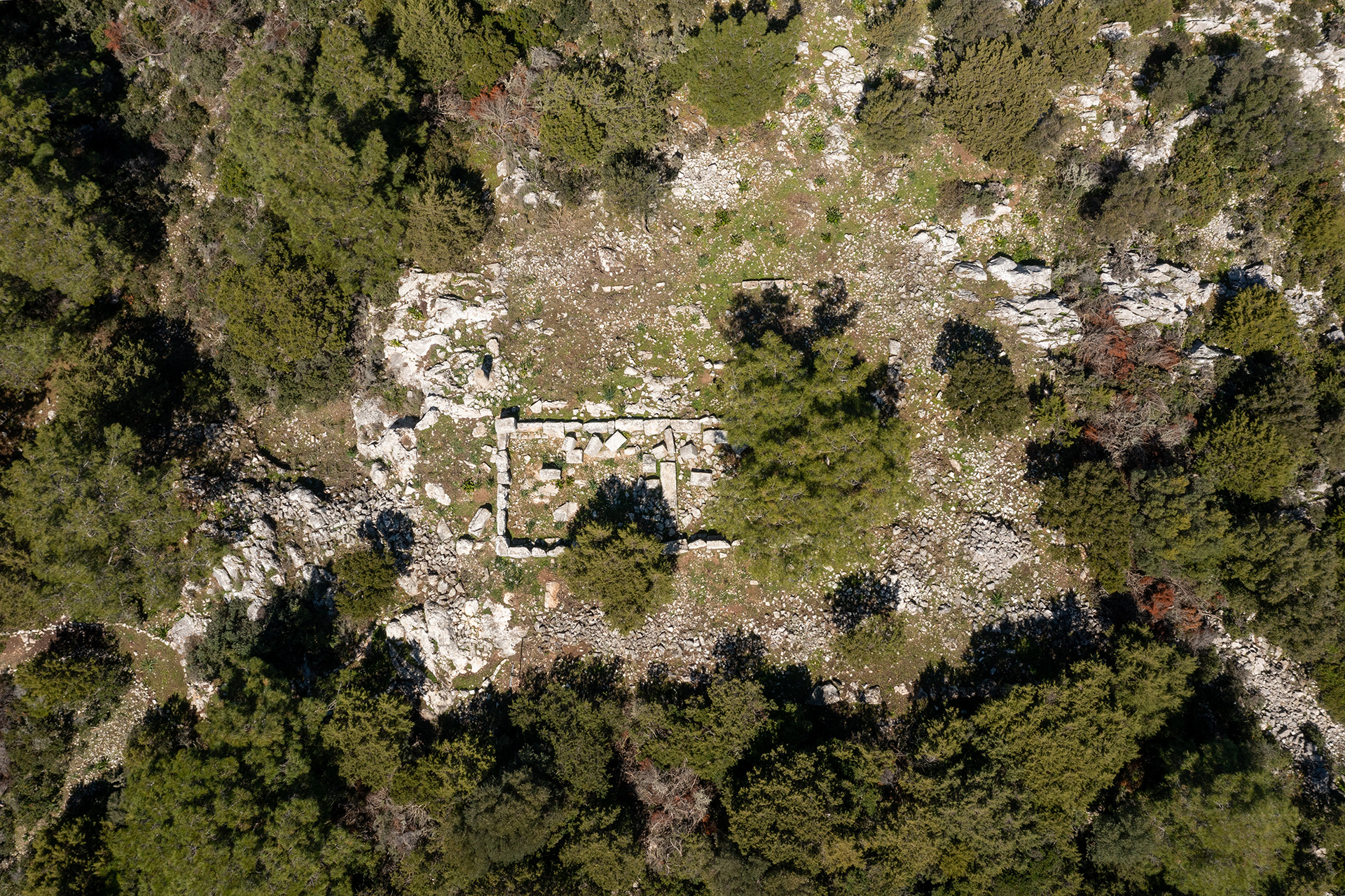
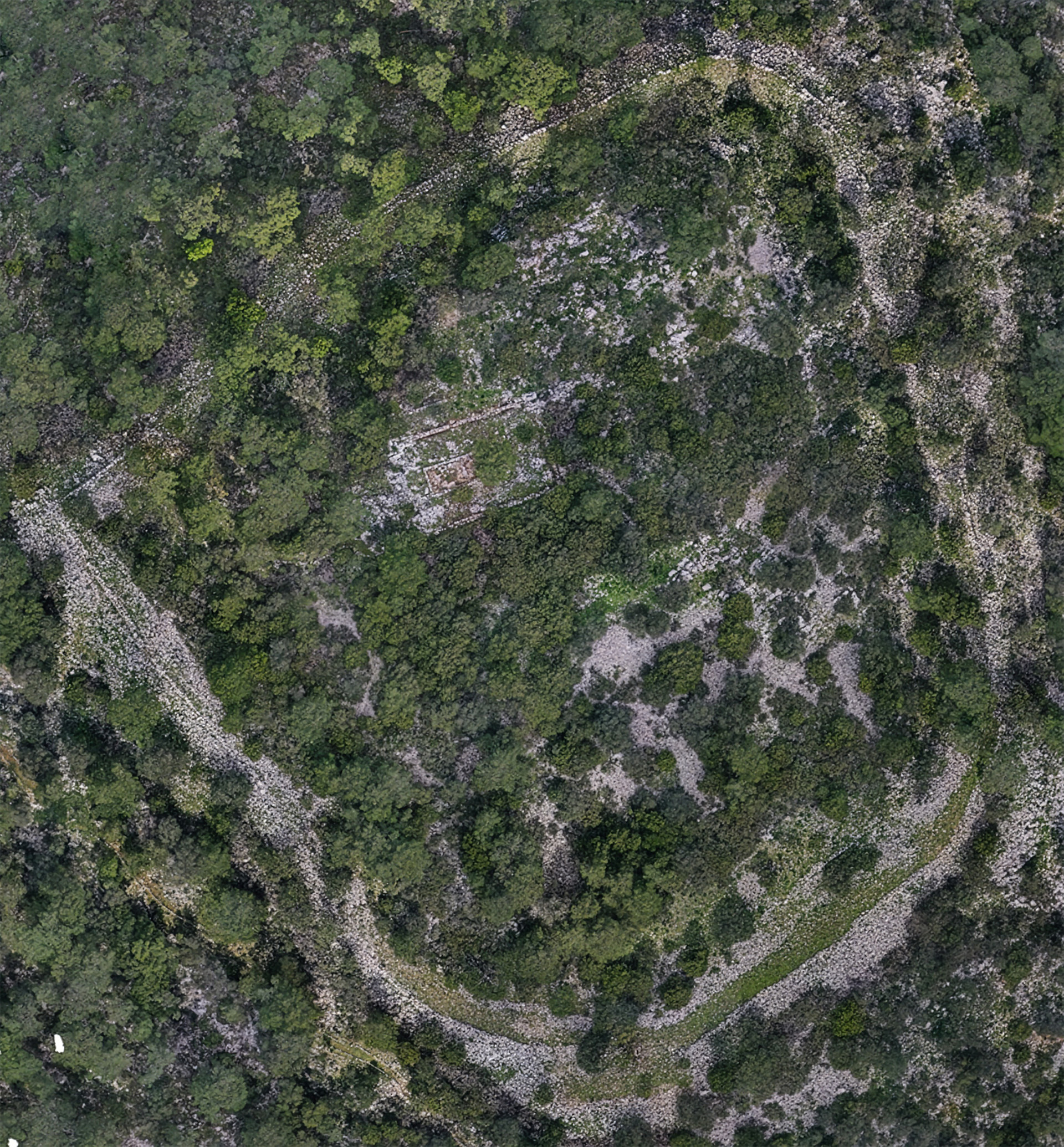
The second phase involved the removal of low and shrubby vegetation and, where necessary, the pruning of trees within a zone approximately 4–5 m wide on both the interior and exterior of the acropolis walls. The cleaning of the walls from vegetation made a large part of the fortification perimeter visible and accessible for the first time in modern research, allowing some observations to be made regarding its course and construction. The wall extends for approximately 620 m around the summit plateau of the hill of Hagios Fokas.
The clearance and vegetation removal were conducted primarily by hand, with minimal mechanical assistance (a small chainsaw) employed only where essential for the project. All the above works were conducted with restraint and care to avoid any disturbance or intervention in the natural landscape and, more generally, in the archaeological site.
Finds conservation
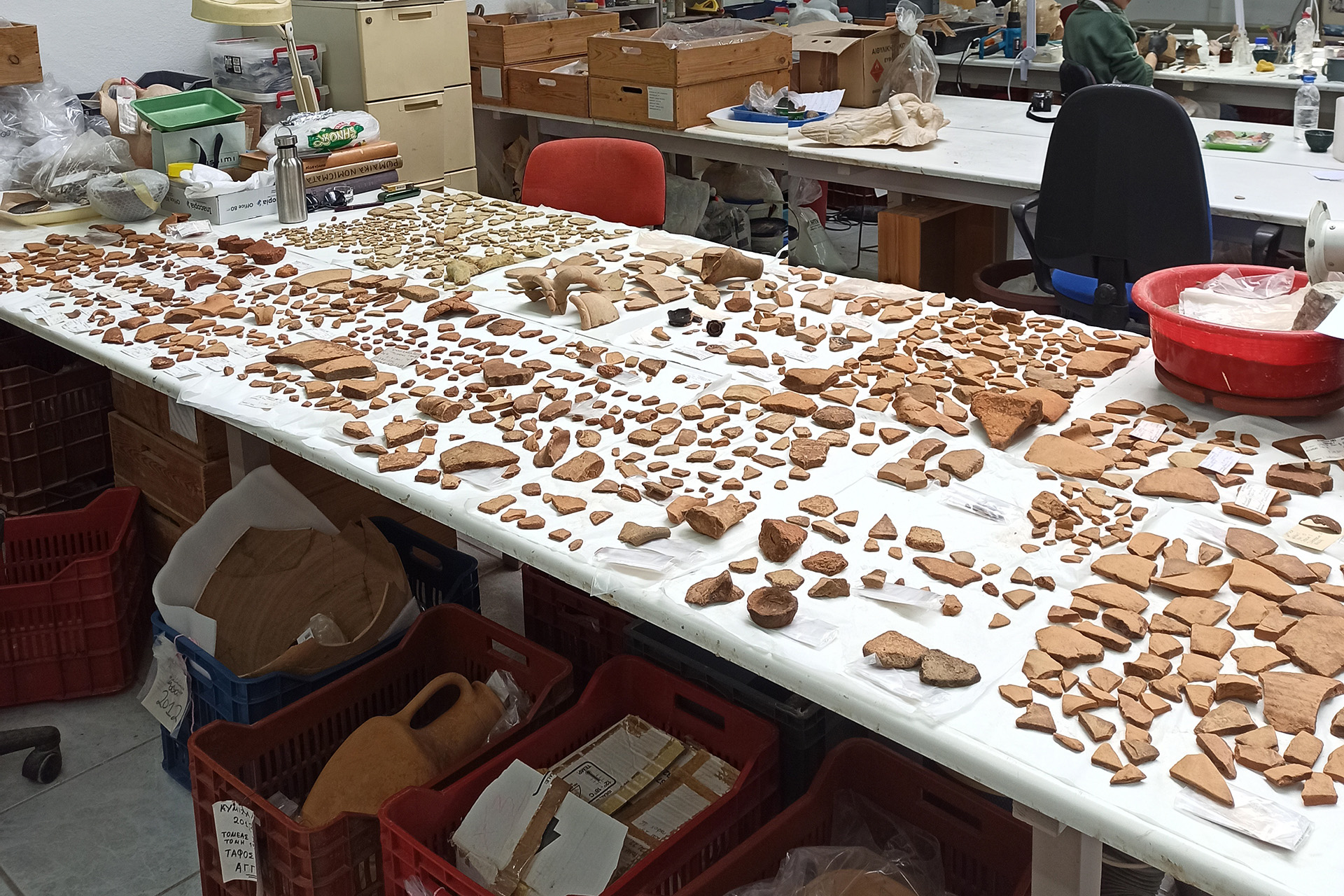
Conservation work on ceramics took place during 2022 and 2023, for a total of four months, at the conservation laboratory of the Ephorate of Antiquities of the Dodecanese. The work was supervised by archaeologist Maria Achiola, with conservator Sofia Kampani in charge of the treatments. In total, the ceramic material from the excavation seasons from 2006 to 2016 from the necropolis were recorded and conserved, as well as the material from the excavation seasons from 2023 to 2025 from the temple area.
The conserved material was placed in boxes and stored by year in the storage facilities of the Ephorate of Antiquities of the Dodecanese. Each storage box is affixed with a laminated label detailing its contents, thereby facilitating ready access for future reference or use.