

Archaeological sites
The acropolis on the hill of Hagios Fokas
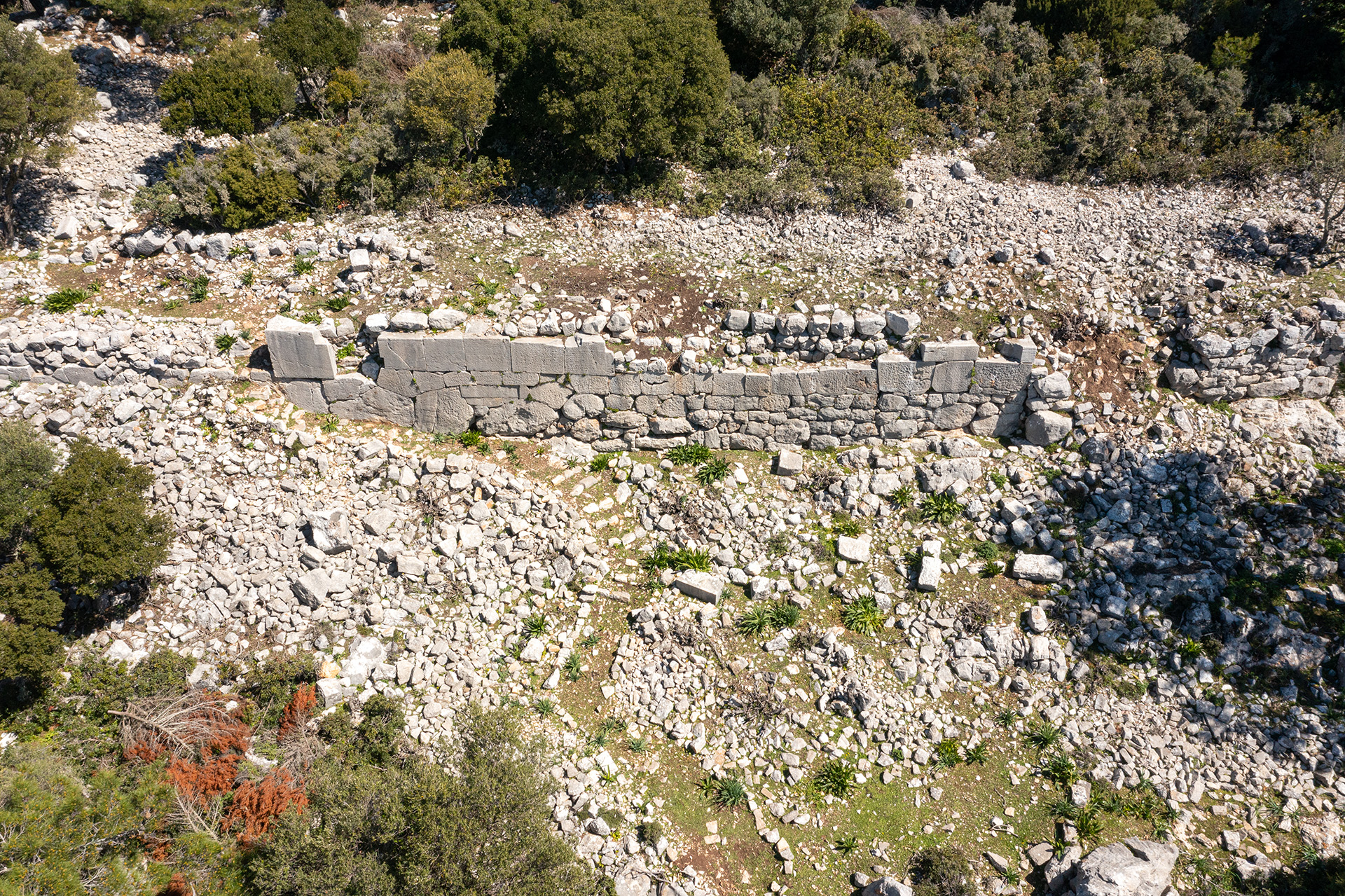
The hill of Hagios Fokas forms the central nucleus of the Deme of Kymissaleis and is the location of the deme’s acropolis, which commands the surrounding landscape. The entire fortification wall is preserved, extending for approximately 620 m around the acropolis and dating to the 4th c. BC. A section on the western side, preserved over a length of about 20 m and reaching in places up to 3 m in height, is particularly well constructed, as it stood directly below the summit temple and was visible from afar.
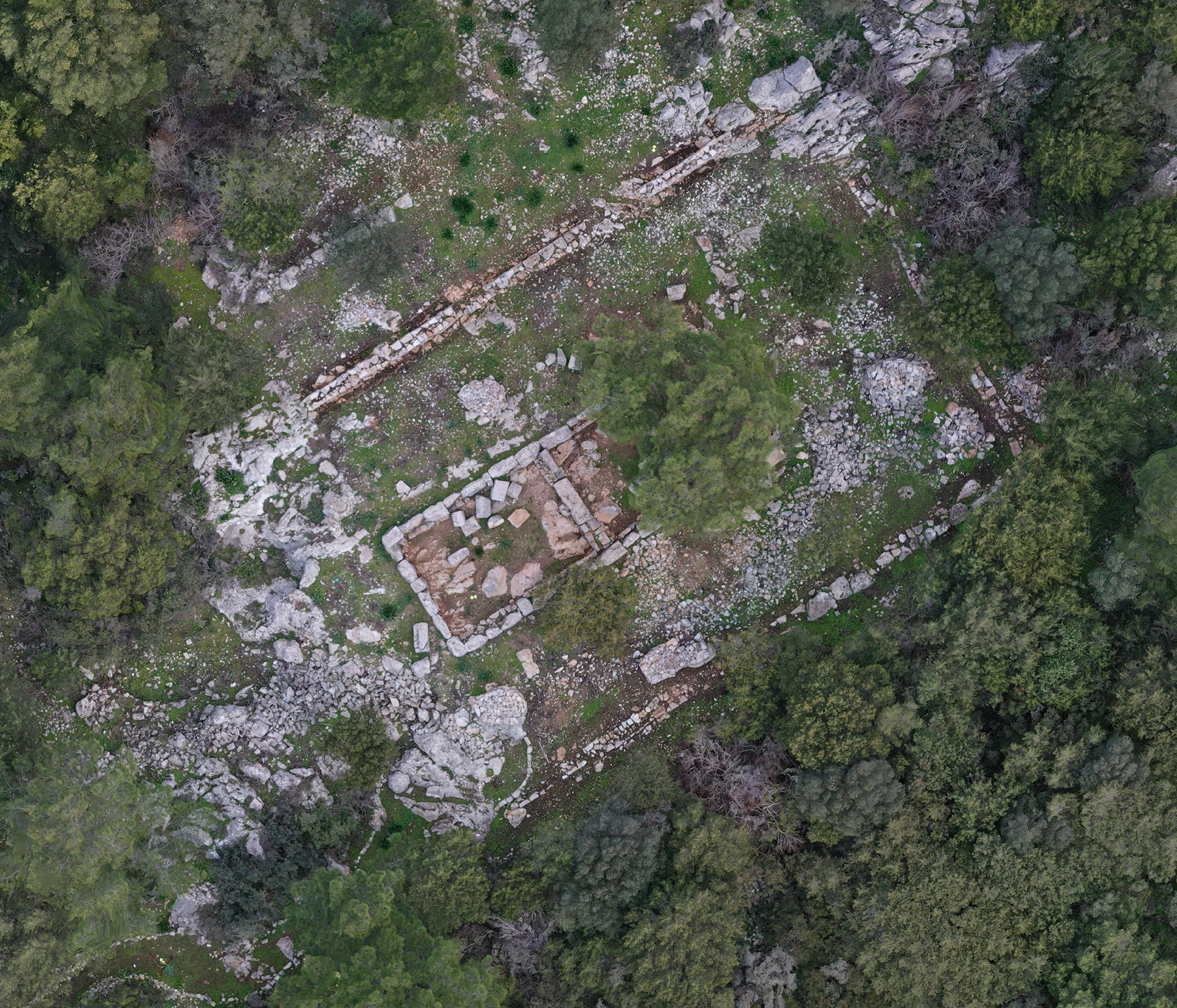
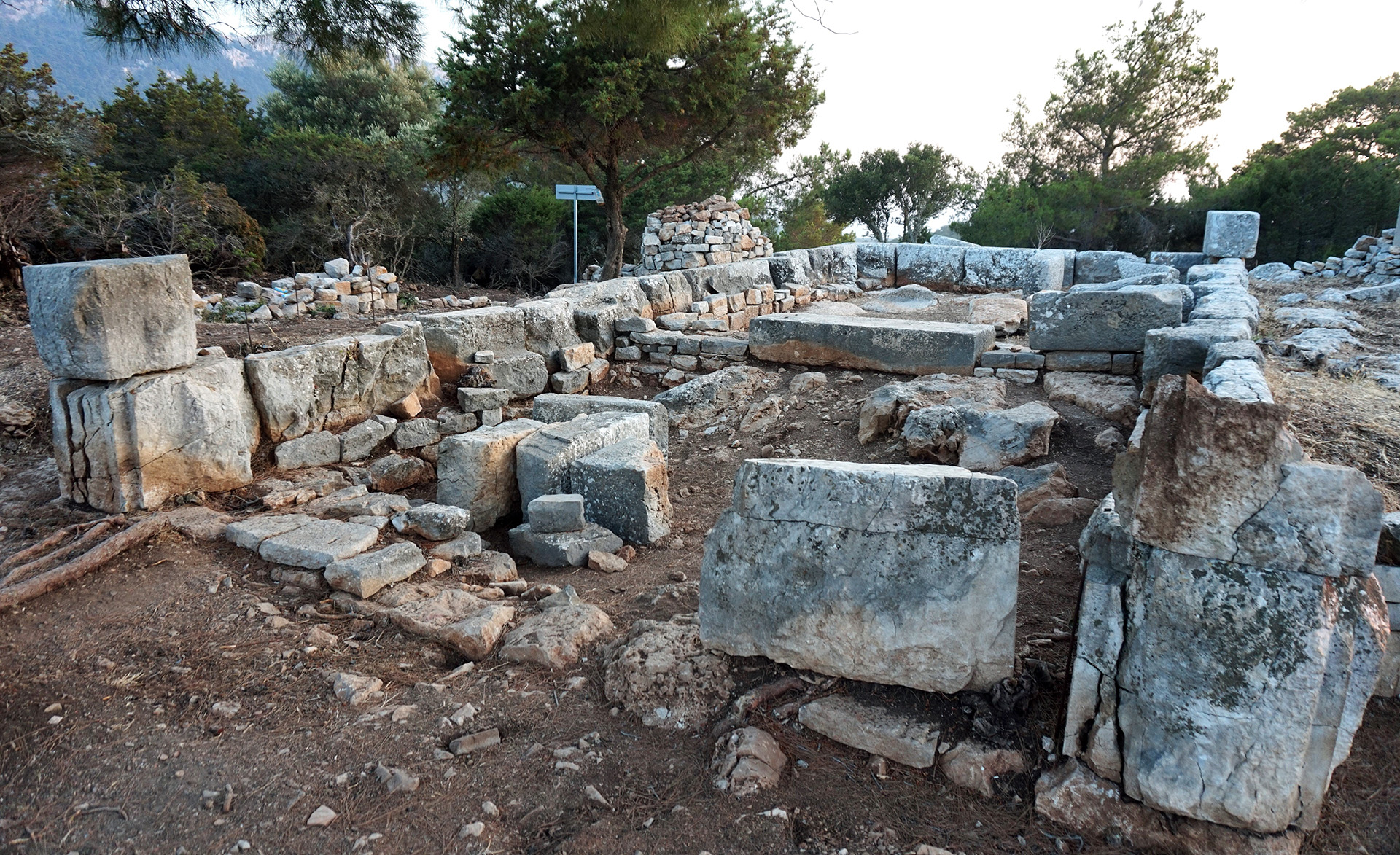
On the summit plateau lie the remains of a small Hellenistic temple of the 3rd-2nd c. BC, measuring 12.50×5.80 m, with its entrance on the eastern side. The temple consists of pronaos and a main chamber (cella). It was likely the most important temple of the Deme of Kymissaleis, although the deity to whom it was dedicated remains unknown.
The central necropolis at Kymissala
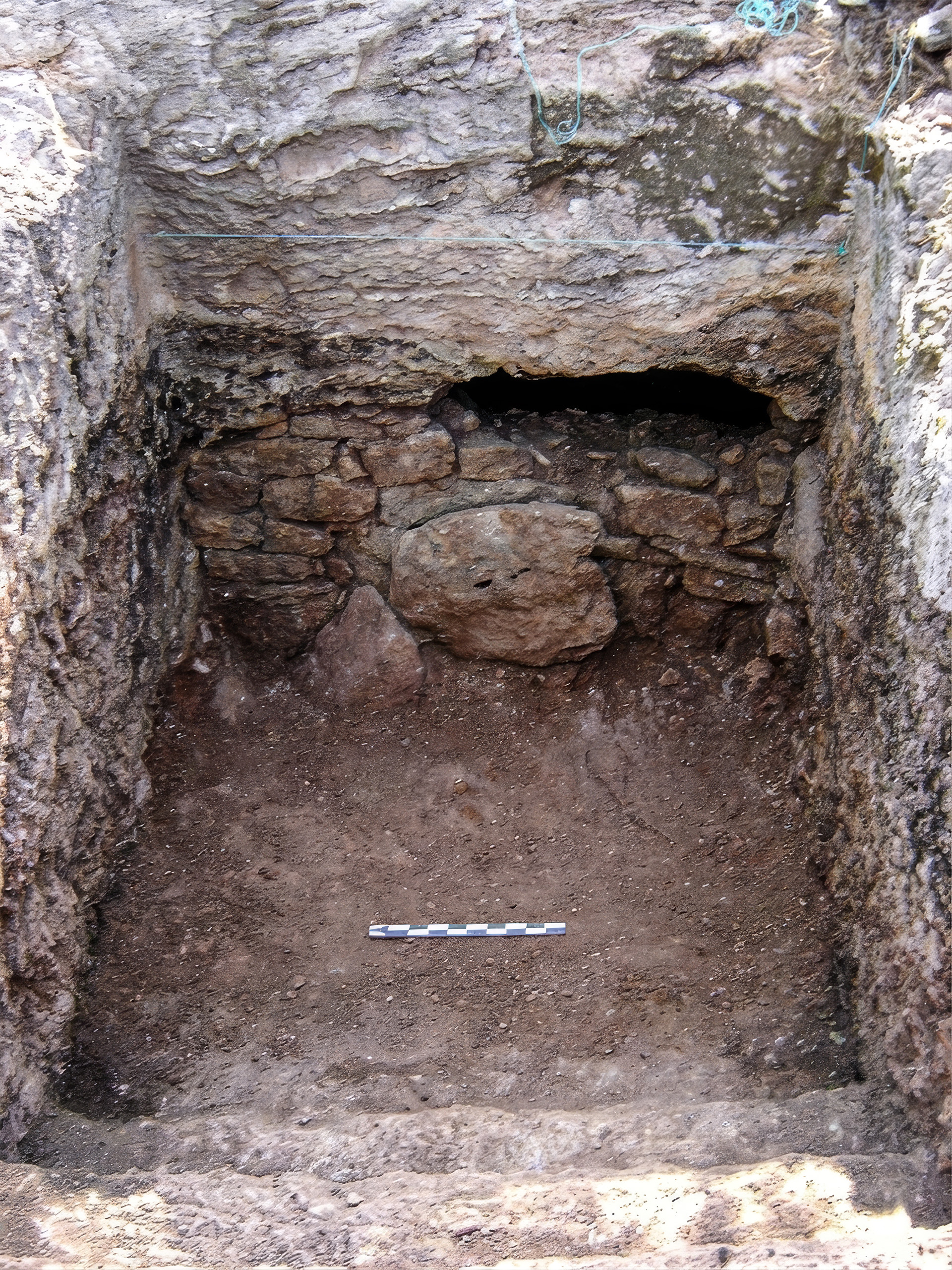
In recent years, excavation activity has focused on the central necropolis of Kymissala. The tombs consist predominantly of rock-cut chamber tombs. They typically comprise a forecourt or dromos (entrance passage), often provided with steps, leading to one burial chamber, or more rarely to two. They are arranged in rows, in stepped formation along the hillsides.
Several above-ground funerary monuments are preserved, some rock-cut and mostly built in ashlar masonry. These features supported stelae, altars, and rectangular bases, such as those now found fallen in front of the tombs in the sector of the Kymissala necropolis situated near the ancient settlement of Vasilika.
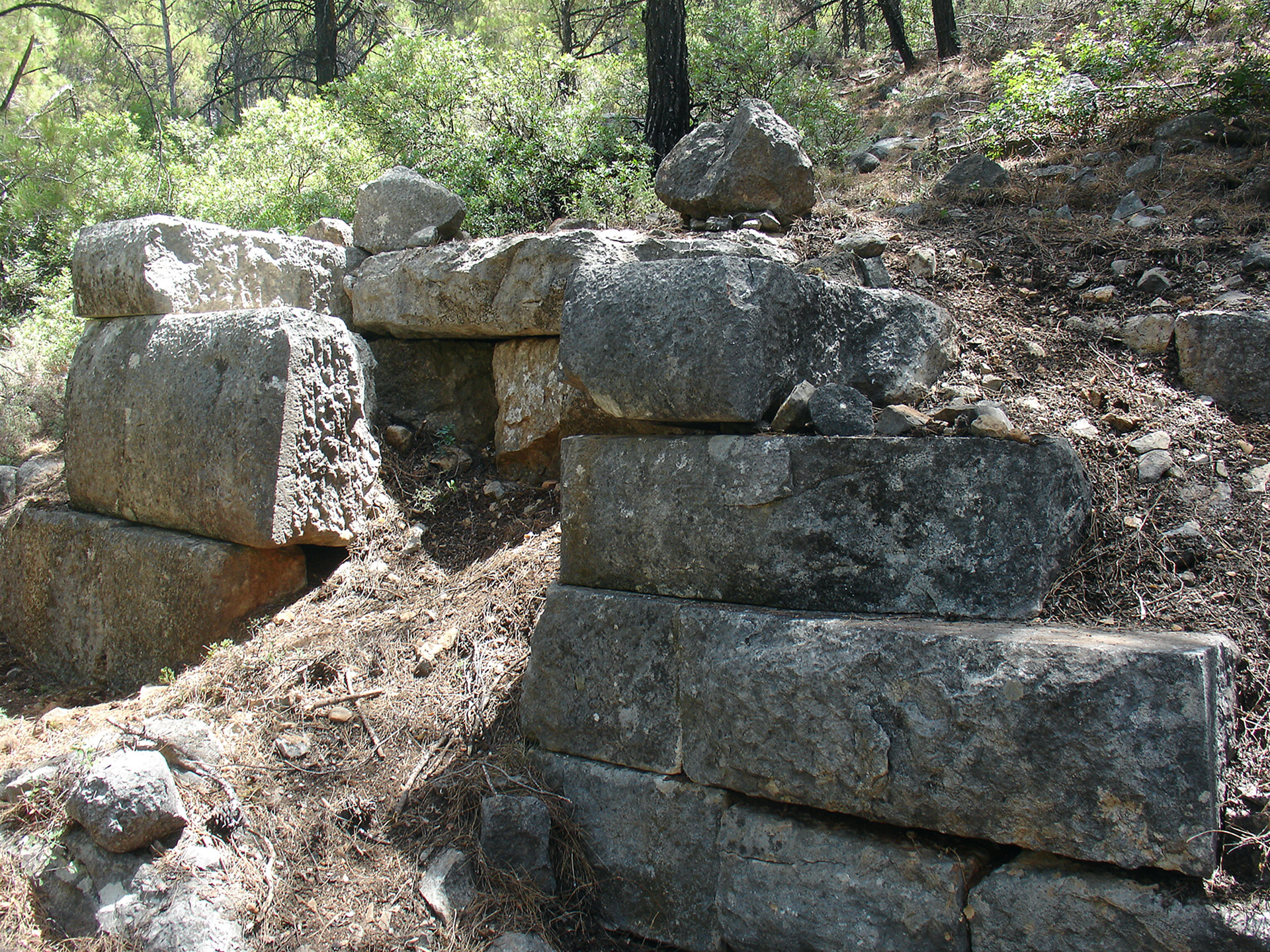
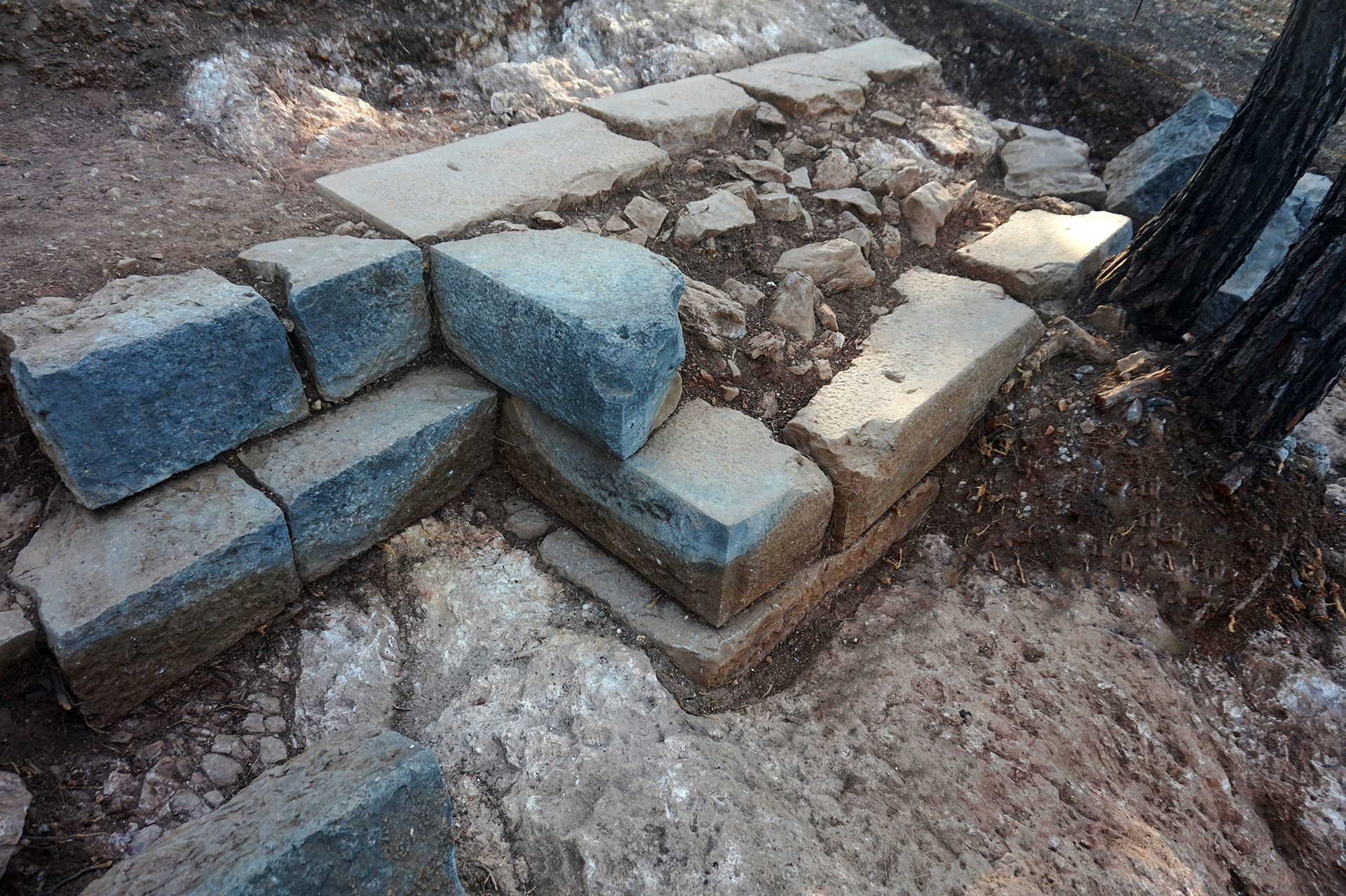
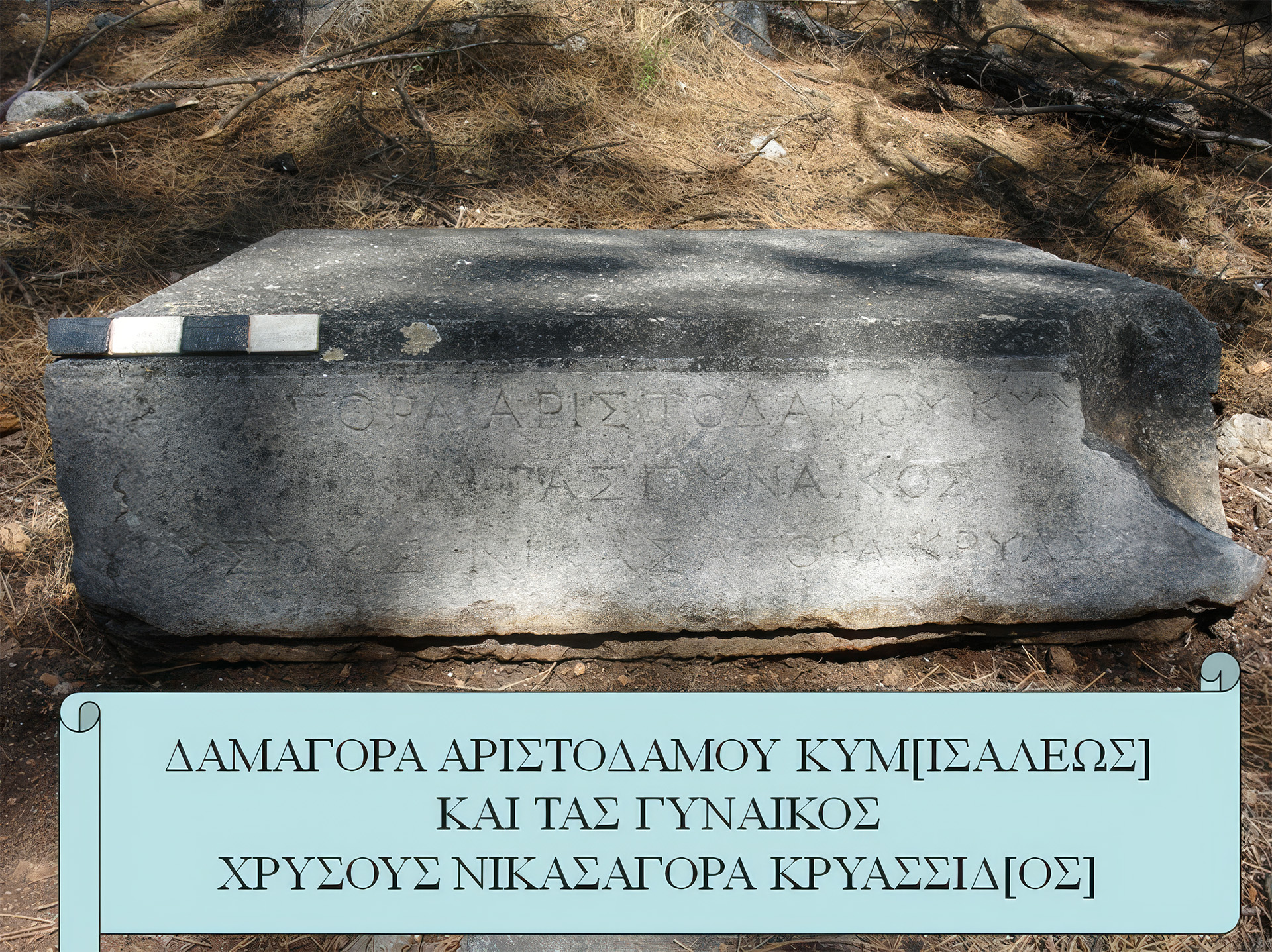
Among them are inscriptions bearing the names of the deceased. One inscription records the burial of KALIPPOS, while another commemorates the Kymissalean DAMAGORAS, son of ARISTODAMOS, who was interred here together with his wife CHRYSO, daughter of NIKASAGORAS from the deme of Kryaseis in Caria, a territory that formed part of the Rhodian state.
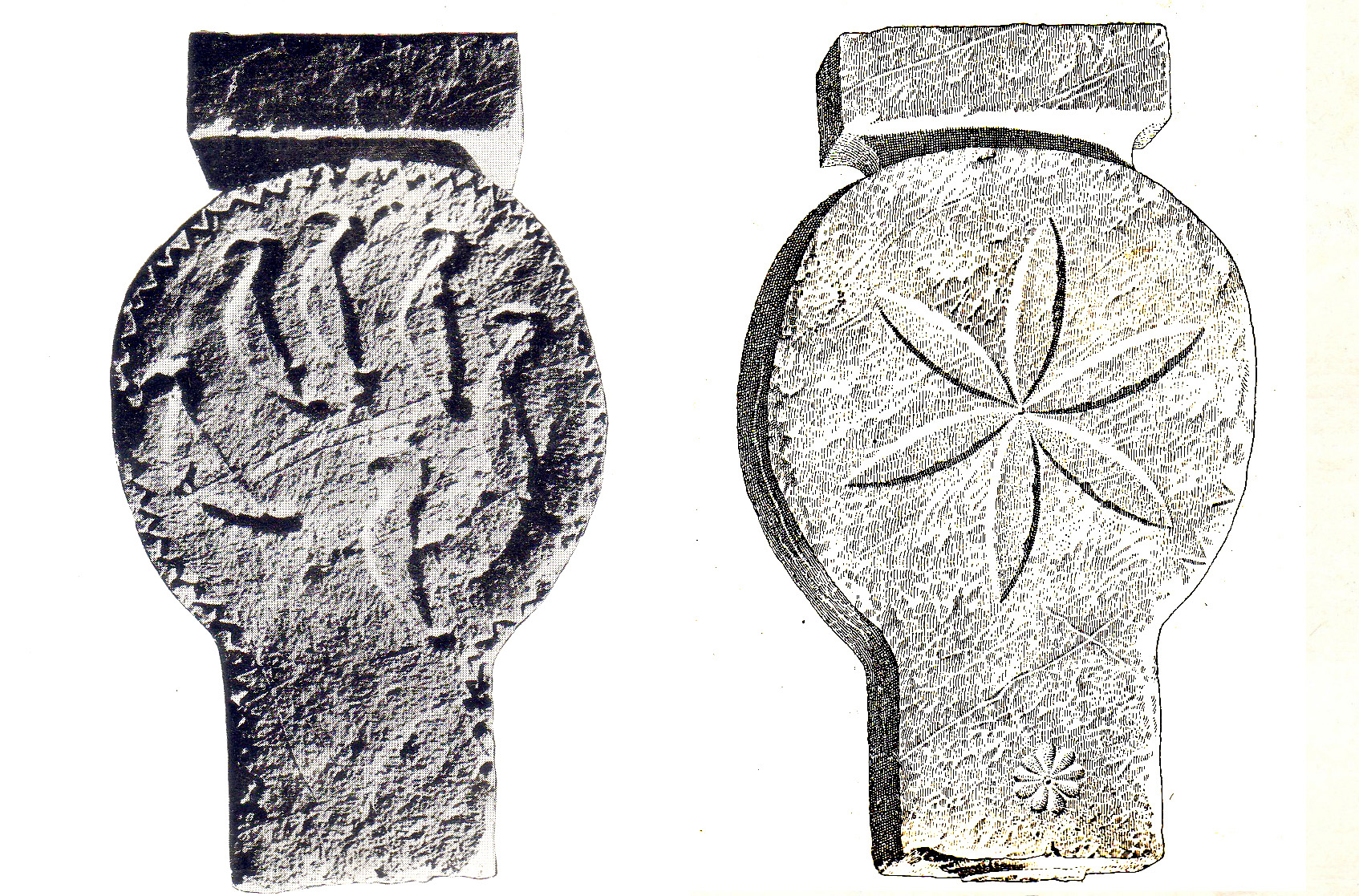
From the archaic sector of the central necropolis comes the famous funerary stele of Kymissala, a unique funerary monument in limestone, preserved to a height of 83 cm. It takes the form of a thick disk set upon a pier and is crowned at the top by a rectangular plinth, on which an additional element once stood. On the disk are depicted, in shallow relief, six birds within an incised toothed decorative frame that runs around the entire surface, while on the other side, there appear a large six-petalled rosette and a smaller nine-petalled one, each within a similar toothed frame. This is one of the earliest surviving monuments of the necropolis –and more broadly of the Greek world– and appears to share similarities with a type of clay figurine that decorated Mycenaean larnakes from Tanagra.
In the same area, a distinctive category of cups dating to the first half of the 6th c. BC was most likely identified for the first time. Owing to the neighbouring contemporary settlement of Siana, they were recorded in the history of art as the famous “Siana cups”.
Intense looting and adventurist archaeological activity at the site of the central necropolis –from the mid-19th through the early decades of the 20th century– deprived us of vast quantities of objects and led to the destruction of many hundreds of tombs, leaving significant gaps in our knowledge of the culture and history of this important Deme of the Rhodian countryside.
The settlement at Vasilika
Among the settlements identified to date, the most interesting is the one at Vasilika, northwest of Hagios Fokas, on a low plateau bordered to the north by a small, flat, cultivable area. At this location, impressive architectural remains of a settlement centre are preserved, which in more recent times gave rise to the local legend of the “King of Kymissaleis”. The ground plan, layout, and character of the buildings are not easy to determine, as they are covered by extensive stone heaps. At the southwestern edge stands a large open space enclosed by walls, possibly corresponding to the enclosure mentioned in earlier descriptions.
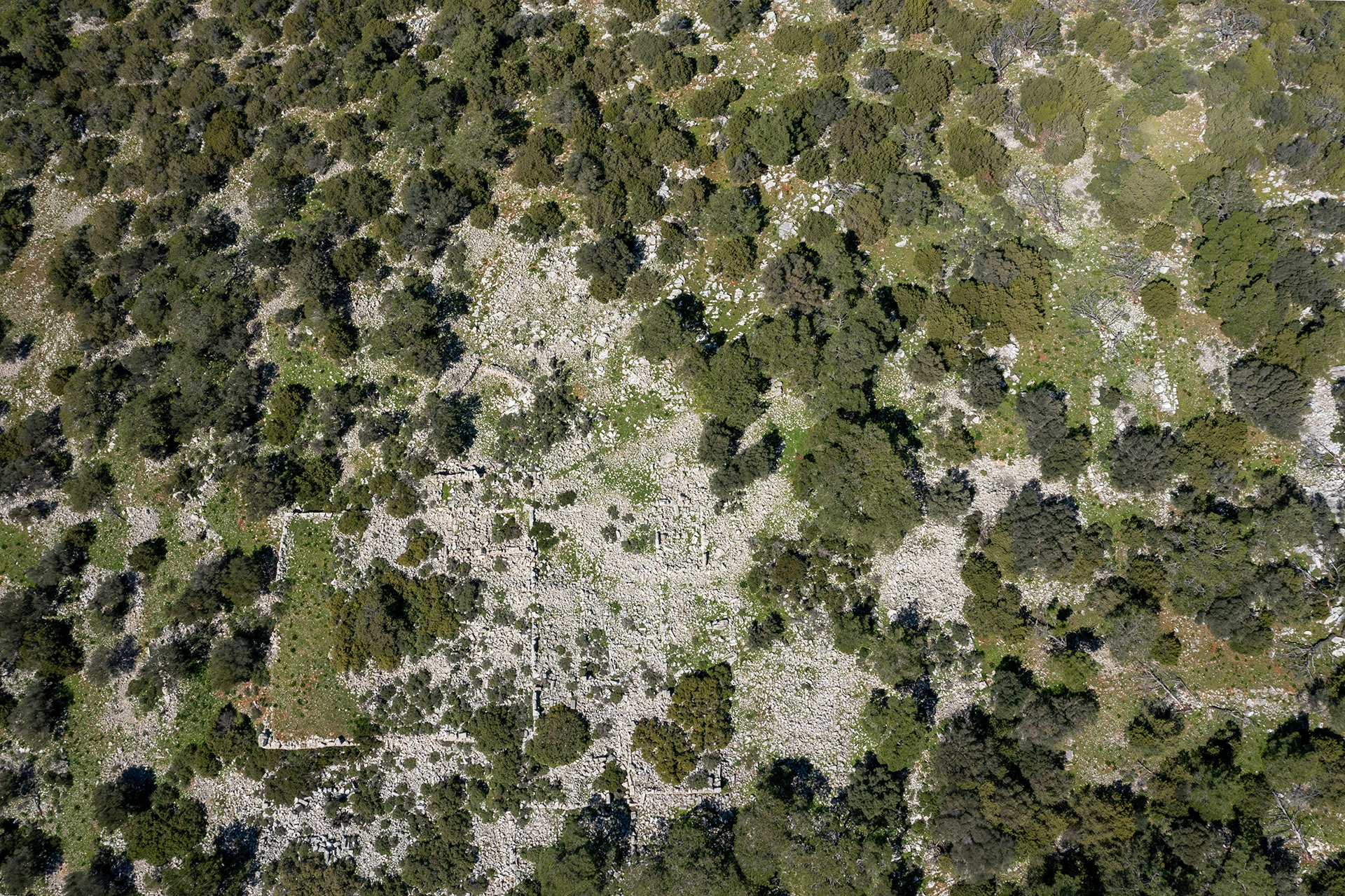
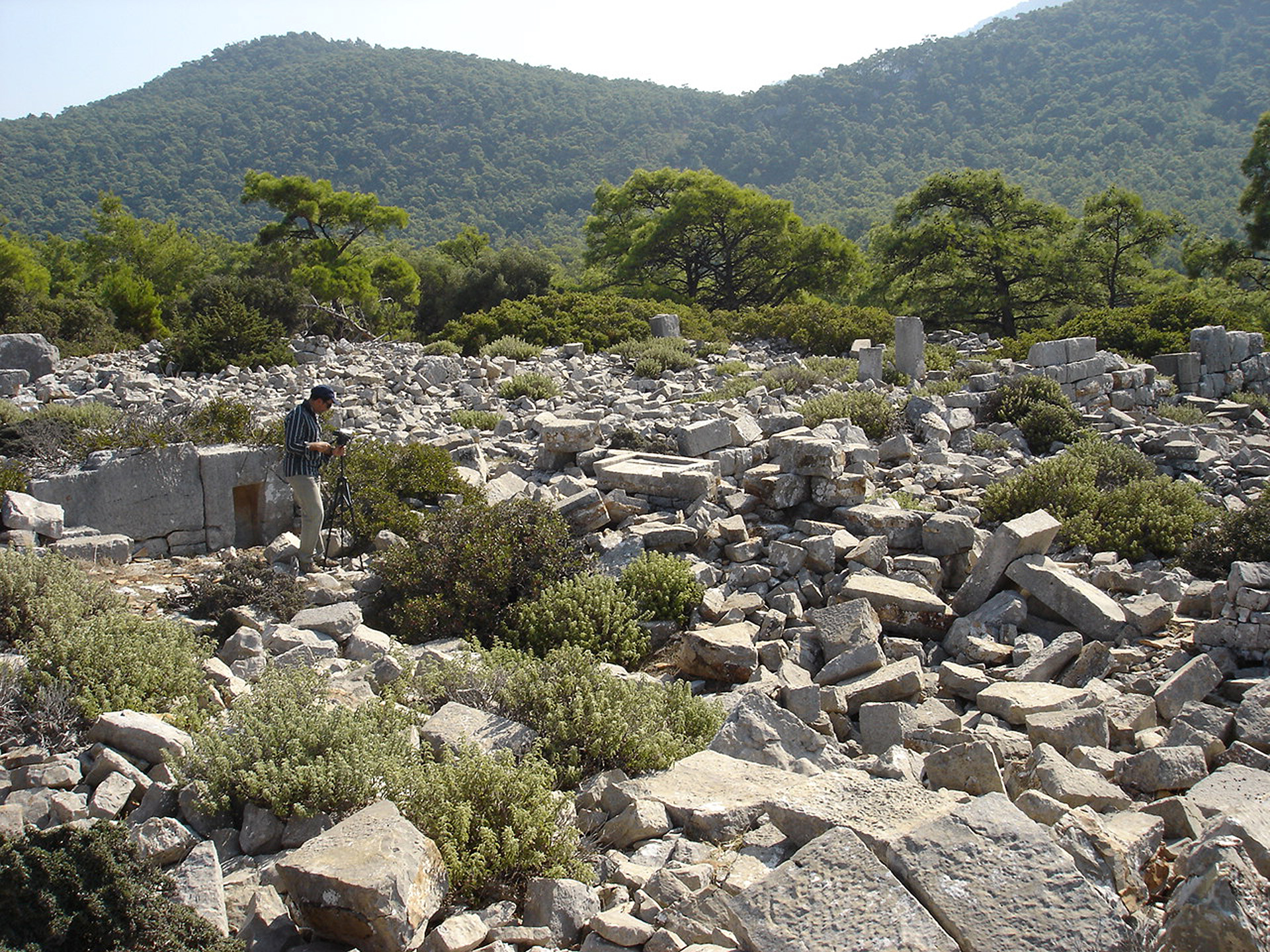
To its northwest, rooms are formed, while along its eastern side runs a long, narrow corridor. Immediately northeast of the enclosure extend rows of buildings with streets between them, intersecting to form building blocks. In several places, the walls of the structures are preserved to a considerable height and display carefully constructed masonry. In various spots, doorjambs and thresholds also remain in situ.
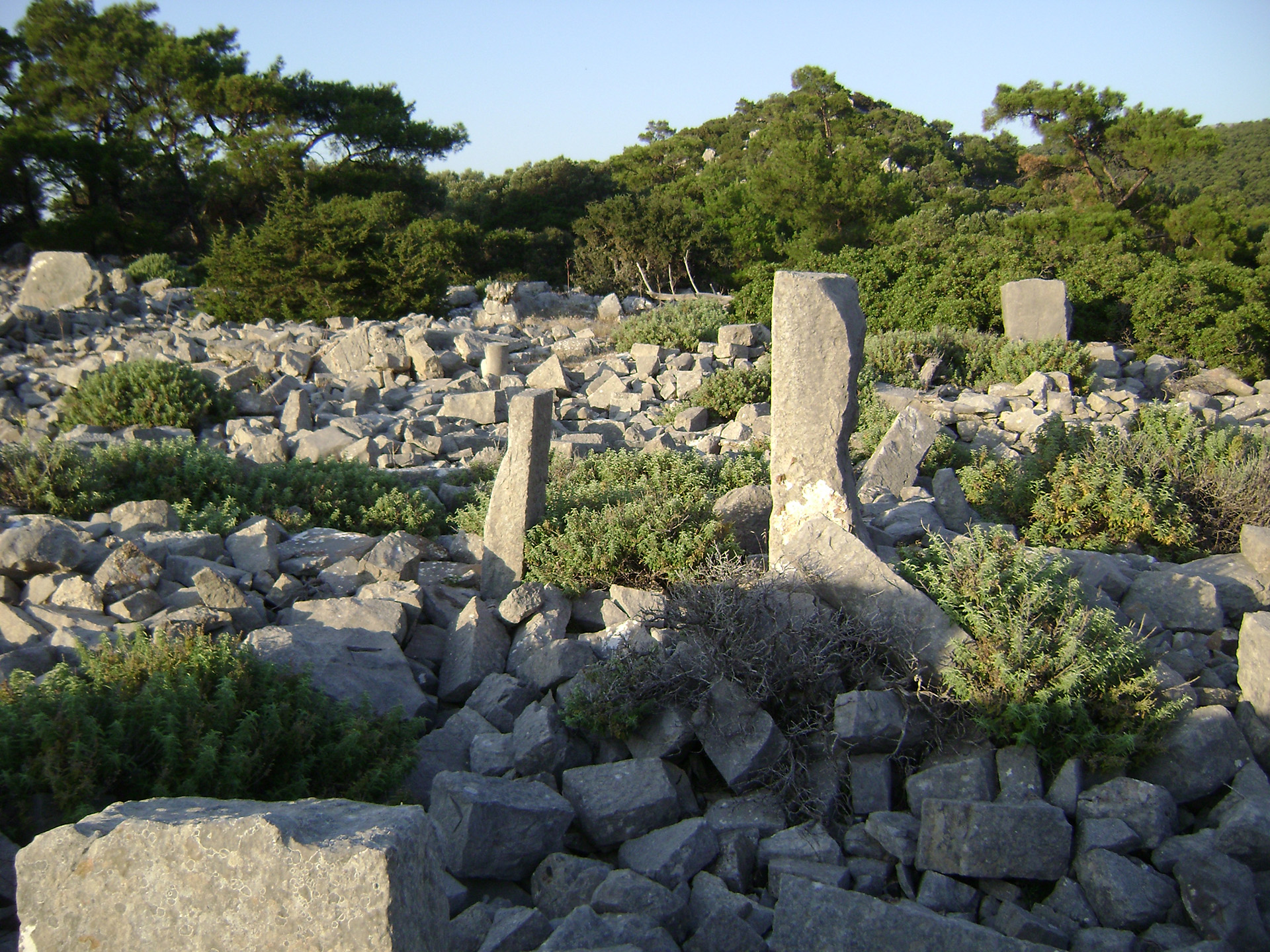
Although life in the settlement at Vasilika may have ended due to a powerful earthquake –as suggested in some areas by the manner and direction of the collapse of walls and architectural elements– a closer look shows that human activity has caused irreparable destruction here over the centuries, something that naturally applies to all the antiquities of Kymissala. During the Knights Hospitaller period (1309-1522), materials from the archaeological sites of Kymissala were likely used for the construction of the castles of Monolithos and Siana, for the coastal towers preserved in the area, and for the neighbouring settlements of Siana and Monolithos. Characteristic of later activity is the presence of more recent lime kilns in the area, one of which was built in the southern part of the Vasilika site and another to the west of the acropolis temple.